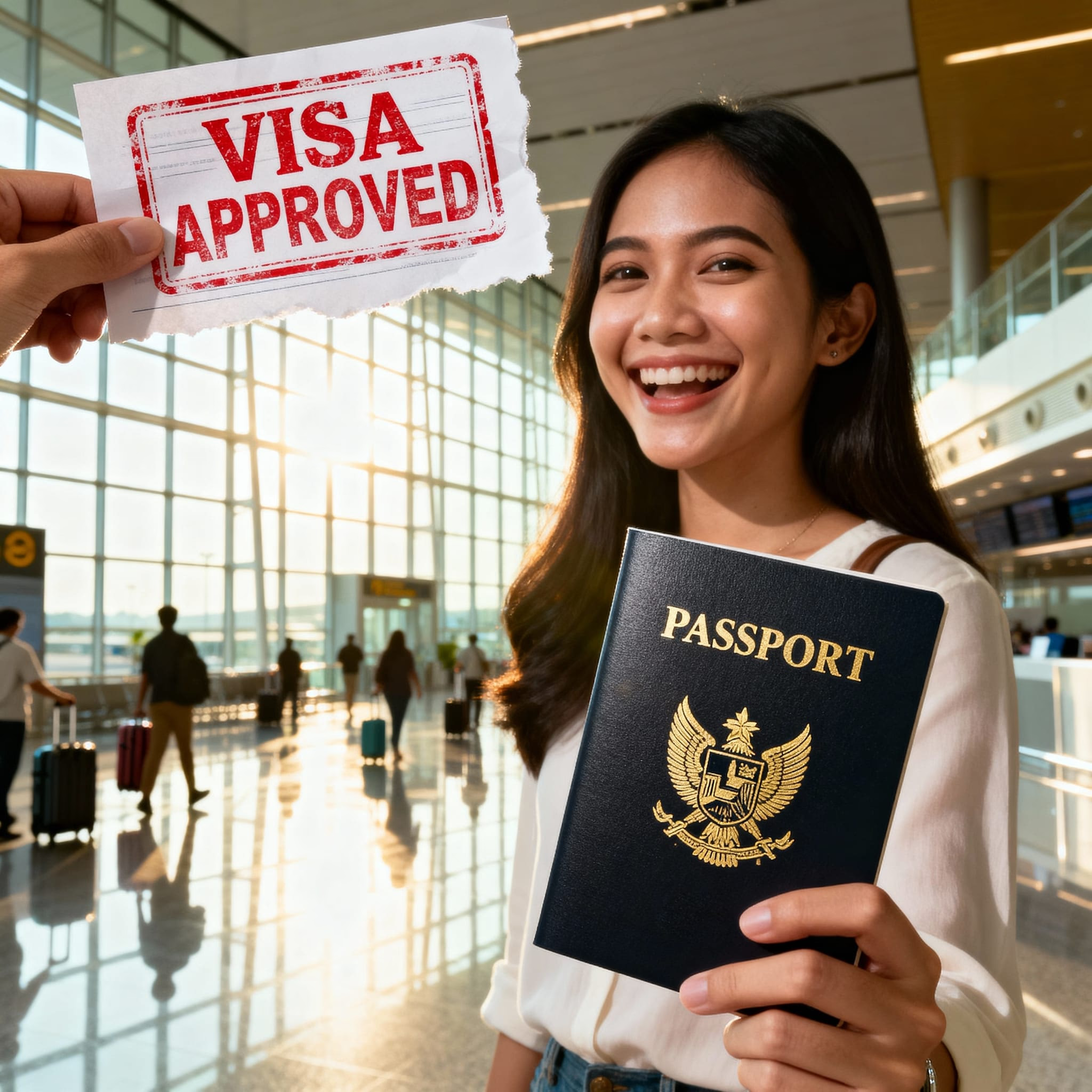
Thinking of working remotely from Dubai? This guide walks you through everything you need to know to secure the Dubai digital nomad visa (Remote Work Visa). From elgibility and documents to costs and international tax tips, we've got you covered.
Learn how to legally base yourself in the UAE as a remote professional or entrepeneur, and tap into Dubai's unbeatable infrastructure and global connectivity for smooth, uninterrupted remote work.
Dubai has cemented its status not merely as a global financial powerhouse but as the premier destination for the highly mobile, high-earning remote professional. Where else can world-class infrastructure, unparalleled safety and a genuinely cosmopolitan lifestyle converge with the promise of a tax-efficient financial structure?
Defining the gateway: The Dubai virtual working programme
The Dubai Digital Nomad Visa is the informal, universally recognised term for the official Dubai Remote Work Visa , which falls under the broader framework of the Dubai Virtual Working Programme.
Launched to attract global talent and inject dynamism into the local economy, this programme offers a specialised one-year residency permit. Crucially, this visa allows you to reside in the UAE while continuing to work entirely for a company or clients based outside the UAE.
It is a strategic move designed specifically for global citizens whose professional success is untethered from physical location. Unlike tourist visas, the remote work visa provides full residency privileges, including the ability to obtain an Emirates ID, open bank accounts, and secure long-term rental agreements—all essential components for establishing a stable, professional life in Dubai.
Section 1: Navigating eligibility criteria
Eligibility for the Dubai Digital Nomad Visa is clearly defined, targeting professionals who can demonstrate financial self-sufficiency and stable remote employment. Meeting these requirements is the foundational step towards a successful application.
Who qualifies?
The visa is structured to appeal to three primary professional profiles:
- Remote employees: Individuals holding full-time, remote positions with employers based internationally. The employment contract must be valid for at least one year from the date of application.
- Freelancers and contract workers: Professionals engaged in long-term contracts or projects with international clients, provided they can clearly demonstrate the consistency and continuity of their professional engagements.
- Business owners/entrepreneurs: Individuals operating their own business registered outside the UAE. This pathway requires verifiable proof of business ownership and stable commercial activity.
The minimum monthly income requirement
The cornerstone of the application is financial stability. Applicants must demonstrate a minimum monthly income of $3,500 USD (or the equivalent in AED, GBP, or EUR).
This financial threshold is non-negotiable and is designed to ensure that remote workers entering Dubai can afford the cost of living without seeking local employment.
Proof of consistent earnings
To satisfy the income requirement, applicants must provide robust documentary evidence. This typically entails:
- Salary/income statements: Pay slips or contracts proving the $3,500 minimum for the last month.
- Bank statements: Clear, verifiable bank statements (usually covering the last three months, though sometimes six months are requested) that reflect the consistent crediting of the required minimum income.
- Longevity of employment: Proof that the remote employment or business has been active for at least one year prior to the application date.
Family inclusion and sponsorship
A major benefit of the Dubai Remote Work Visa is the ability to sponsor dependants. Successful applicants can include their spouse and dependent children under their visa umbrella. Each dependent will require their own residency process, including medical examinations and Emirates ID applications, which must be factored into the overall cost and timeline.
Section 2: The essential required documents checklist
Preparing a comprehensive and error-free dossier is crucial for expediting the application process through the General Directorate of Residency and Foreigners Affairs (GDRFA). The following checklist outlines the mandatory items required for submission:
- Valid passport: The applicant’s passport must be valid for a minimum of six months upon entry into the UAE.
- Passport-sized photograph: Recent, high-quality, digital photograph conforming to standard UAE visa photo requirements (usually white background).
- Proof of remote employment (for employees): A clear, certified copy of the employment contract stipulating a minimum 12-month validity and confirming the applicant’s role is entirely remote. This document must clearly state the monthly salary.
- Proof of business ownership (for entrepreneurs/freelancers): Valid business licence or certificate of incorporation, registered outside the UAE. Proof of ownership (e.g., share certificates). Documentation verifying the duration of the business operation (minimum one year).
Proof of business ownership (for entrepreneurs/freelancers):
- Valid business licence or certificate of incorporation, registered outside the UAE.
- Proof of ownership (e.g., share certificates).
- Documentation verifying the duration of the business operation (minimum one year).
- Bank statements: Official, stamped bank statements (typically the last three to six months) clearly showing the regular, consistent transfer of income that meets or exceeds the $3,500 minimum threshold.
- Health insurance: Proof of health insurance coverage that is valid within the UAE for the entire duration of the one-year visa. Purchasing this policy locally or internationally must be done before finalising the residency application.
- Visa application form: The completed online application form submitted through the official government portal or authorized channel.
Section 3: The step-by-step application process
The application journey is streamlined, reflecting Dubai’s efficiency, but requires careful adherence to the official procedures.
Step 1: Initial application submission
The process begins online, either through the official Dubai government portals (like the GDRFA website or the dedicated Virtual Working Programme portal) or via an accredited travel agency or professional outsourced service provider (PRO service).
- Submission: You upload all required documents (as detailed in Section 2) and pay the initial visa application fee.
- Location differential: Applying from abroad: Once provisionally approved, you will receive an entry permit, which allows you to fly into the UAE to complete the remaining steps. Applying from within Dubai (status change): If you are already in Dubai on a tourist visa, you must complete a 'status change' application to transition directly into residency status once the initial permit is granted. This often involves paying an additional status change fee.
Location differential:
- Applying from abroad: Once provisionally approved, you will receive an entry permit, which allows you to fly into the UAE to complete the remaining steps.
- Applying from within Dubai (status change): If you are already in Dubai on a tourist visa, you must complete a 'status change' application to transition directly into residency status once the initial permit is granted. This often involves paying an additional status change fee.
Step 2: Mandatory medical fitness test
Upon arriving in or remaining in Dubai, the applicant must undergo a mandatory medical fitness test. This is a non-negotiable step for all UAE residency visas.
- Procedure: The test typically involves a blood test (checking for infectious diseases such as HIV and Hepatitis B/C) and a chest X-ray (checking for tuberculosis).
- Location: These tests are conducted at designated government-approved medical centres.
Step 3: Biometrics and residency submission
Once the medical test results are cleared, the applicant proceeds to finalise the residency submission to the General Directorate of Residency and Foreigners Affairs (GDRFA).
- Biometrics: This involves capturing fingerprints, iris scans, and facial recognition data required for the official identification documents.
- Final review: The GDRFA reviews the entire file, confirming the medical clearance and eligibility requirements.
Step 4: Obtaining the Emirates ID
The final, and most crucial, step is the issuance of the Emirates ID.
- The Emirates ID is the essential residency card in the UAE. It acts as your primary proof of identity, residency status, and access to all essential services (banking, utilities, mobile services, etc.).
- Once issued, your residency is official for the 12-month period.
Processing times
While Dubai is efficient, processing times can vary. Typically, from initial submission to receiving the Emirates ID, the process can take between two to six weeks, depending on the speed of the medical fitness test and the current volume of applications at the GDRFA. Planning for a slightly longer timeframe is advisable, particularly for those intending to immediately secure leases or register utilities.
Section 4: Financial overview: Visa costs and taxation
For high-earning professionals, the financial considerations are paramount, spanning the upfront application costs to the long-term tax implications.
The cost layout
The total financial layout for securing the Dubai Digital Nomad Visa involves several separate payments. These costs are subject to change and may vary slightly depending on the application channel used (direct government portal vs. PRO service).
Item
Estimated cost (USD)
Details
Visa Application Fee
$250 – $300
The primary fee for the 12-month remote work permit.
Change of status fee
$150 – $200
Required if applying while already inside the UAE on a tourist visa.
Medical fitness test
$100 – $150
Fees paid to the government-approved medical centre.
Emirates ID fee
$70 – $100
Cost for the issuance of the physical residency card.
UAE health insurance
$1,000 – $4,000+
Annual premium, heavily dependent on age, coverage level, and pre-existing conditions. Comprehensive, reputable coverage is recommended.
Family sponsorship fees
$200 – $300 per dependent
Additional administrative fees for each spouse or child sponsored under the primary applicant.
Optional PRO service fee
$500 – $2,000
Fee for using a professional agency to manage the submission and processing. Recommended for efficiency.
Note: These figures are estimates. Applicants should consult the official GDRFA channels for the most current fee structure.
Taxation for digital nomads: The crucial a dvantage
The single largest financial draw for professionals moving to Dubai is the taxation framework.
The UAE does not impose personal income tax on salaries, wages, or wealth. This means that income earned while you are a resident, provided it originates from outside the UAE (as is required by the digital nomad visa), is not subject to local income tax filing or liability.
However, leveraging this benefit requires sophisticated tax planning:
- International tax residency: Obtaining the Dubai Digital Nomad Visa grants you residency , but it does not automatically exempt you from tax obligations in your home country. Many nations, particularly in the OECD, have strict rules regarding international tax residency, often requiring individuals to spend less than 183 days a year in the home jurisdiction to break tax ties.
- Foreign-earned income: U.S. citizens, for example, are taxed on worldwide income and must adhere to specific IRS filing requirements (such as claiming the Foreign Earned Income Exclusion, FEIE).
- Corporate tax: While personal income tax is nil, entrepreneurs operating businesses should note the recent introduction of a 9% corporate tax rate in the UAE for profits exceeding AED 375,000 (approx. $102,000 USD). This applies to locally derived income; income derived from outside the UAE is generally exempt, but nuances apply.
Actionable advice: Before relocating, it is absolutely essential to consult with an international tax advisor specialising in expatriate affairs. This step ensures full compliance in your home country while legally maximising the benefits of Dubai's tax-efficient environment.
Section 5: Living the remote life in Dubai
Dubai offers a life of extraordinary convenience and opportunity for the established remote worker. It is an environment built for efficiency and high standards.
Infrastructure and quality of life
Dubai’s reputation for world-class infrastructure is well-earned. The city boasts exceptionally fast, reliable internet connectivity (crucial for remote work), sophisticated transportation systems (including the automated Metro) and unparalleled public safety.
The high quality of life is defined by immaculate urban planning, luxury amenities, diverse culinary scene and zero tolerance for crime, making it an ideal environment for families and professionals alike.
Practical logistics
Settling in is straightforward thanks to the clarity provided by the Emirates ID:
- Accommodation: While rental costs can be high (especially compared to Southeast Asian nomad hubs), the market offers everything from modern apartments in Downtown Dubai to expansive villas in expat communities. Securing a long-term lease requires the Emirates ID.
- Banking: Opening a full-service bank account is necessary and requires the Emirates ID and proof of residency. Dubai’s banking sector is highly competitive and technologically advanced.
- Utilities: Establishing accounts for DEWA (Dubai Electricity and Water Authority) and internet/mobile services (Etisalat or du) is a smooth process once residency is confirmed.
- Coworking Spaces and Networking: Dubai has a burgeoning ecosystem of professional coworking spaces (such as those in DIFC or Dubai Media City), facilitating networking and collaboration with fellow high-calibre global entrepreneurs and expatriates.
Cost vs. benefit
While the cost of living is significantly higher than in many competing digital nomad destinations, the benefit of the tax-free personal income structure often compensates for this difference, particularly for high-earning individuals. The trade-off is higher expenditure for a vastly superior level of stability, safety, and infrastructure quality.
Your next strategic move
The Dubai Digital Nomad Visa is more than just a permit; it is a strategic decision that places you and your remote business operations at the nexus of global commerce. It offers an unrivalled combination of financial efficiency, safety, and an aspirational standard of living.
For the high-achieving professional seeking a dynamic base that respects and rewards global mobility, Dubai represents the optimal platform.
Frequently asked questions
Securing the Dubai Remote Work Visa grants you immigration residency, allowing you to live legally in the UAE for one year. However, this status does not automatically establish you as a tax resident in the eyes of international tax treaties. Tax residency is typically determined by the '183-day rule' (spending more than six months of the year in the UAE) and the concept of your 'centre of vital interests' (where your permanent home and economic ties lie). For high-net-worth individuals, achieving true tax non-residency in your home country requires stringent adherence to international laws, often involving severing substantial ties. It is crucial to consult an international tax specialist before relocating to ensure you correctly manage tax residency status both in the UAE and abroad.
The Dubai Remote Work Visa is valid for a single year. Renewal is permissible, provided the applicant can demonstrate the continued fulfilment of the original eligibility criteria. This includes maintaining the minimum monthly income requirement ($3,500 USD or equivalent) and providing updated documentation proving sustained remote employment or business ownership registered outside the UAE. There is currently no mandated cap on the number of times the visa can be renewed, making it a viable long-term residency solution for persistent global remote talent, provided the terms of the visa programme remain consistent.
No. The fundamental premise of the Dubai Remote Work Visa is that your income must originate from a source outside the UAE. The visa explicitly prohibits working for any UAE-based employer or actively engaging in local commercial activities (such as providing services exclusively to UAE-registered entities) that would ordinarily require a traditional employment residency visa sponsored by a local company. If you intend to take up local employment, you must apply to change your visa status, typically requiring a cancellation of the remote work visa and sponsorship by the hiring UAE organisation.
Once you enter Dubai and complete the mandatory medical fitness test and biometrics submission (as detailed in Section 3), the processing of the residency stamp and the issuance of the physical Emirates ID card generally takes between two to six weeks. The Emirates ID is absolutely essential. You cannot sign a long-term apartment lease, register utilities (like DEWA), or open a full-service bank account until this card is issued. While some banks may offer basic accounts with just the entry permit, comprehensive banking services for salary transfers and credit facilities require the official Emirates ID.
The family sponsorship provision allows the primary visa holder to bring their immediate family members. This typically includes the legal spouse and dependent children. For children, dependency usually applies up to the age of 18, though this limit can sometimes be extended to 21 for male dependents still pursuing higher education within the country. It is important to note that extended family members, such as parents or adult siblings, do not generally qualify under the remote work visa sponsorship and would require separate, often more complex, residency pathways.
This guide is provided for general informational purposes only and does not constitute legal, tax, financial, or other professional advice from ALTERY LTD or its affiliates. It should not be used as a substitute for advice from qualified professionals.
Altery makes no representations, warranties, or guarantees, whether express or implied, that the information in this guide is accurate, complete, or up to date.