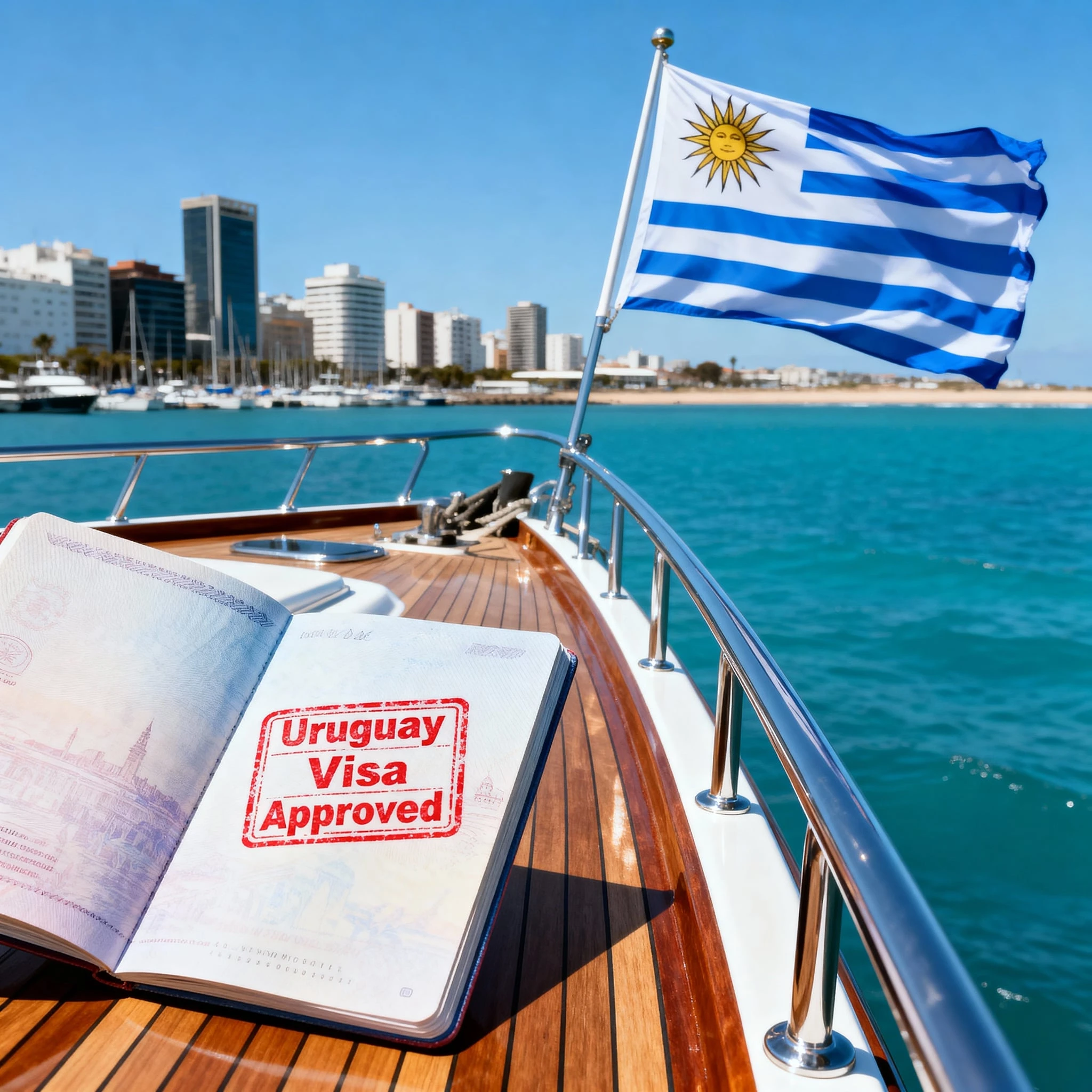
An authoritative and detailed guide for high-earning remote professionals on navigating the Uruguay Digital Nomad Visa (Residencia Provisoria – Nómadas Digitales). It covers essential eligibility, the precise step-by-step application process, strategic tax advantages (focusing on non-resident status and the 183-day rule), and the clear pathway to long-term residency in South America's most stable nation.

For the discerning high-earning remote professional, the choice of a home base is not merely about climate or connectivity; it is a calculation of political stability, fiscal efficiency, and uncompromising quality of life. In this strategic matrix, Uruguay emerges as the uncontested winner, rightly earning its moniker as The Switzerland of South America.
Uruguay stands out in the region due to its deep democratic history, exceptionally low crime rates, robust legal framework, and fierce commitment to civil liberties. These factors, combined with a sophisticated infrastructure—boasting some of the fastest and most reliable fibre optic internet connectivity on the continent—make it an ideal haven for digital nomads seeking security and efficiency.
The Uruguayan government has formally recognised the value brought by highly skilled, foreign-income-generating professionals, leading to the creation of a targeted residency pathway. This crucial permit is formally known as the Residencia Provisoria – Nómadas Digitales (Provisional Residency for Digital Nomads).
This provisional residency is specifically designed for individuals generating foreign income through remote work or independent contracts. It is an expedited, streamlined process that eliminates the bureaucratic complexity often associated with standard residency applications, positioning Uruguay as a truly favourable strategic base for long-term remote work.
The Residencia Provisoria – Nómadas Digitales programme operates on a foundation of straightforward eligibility criteria, demanding clear evidence that the applicant is self-sufficient and poses no risk to the local community. Precision in documentation is paramount for a swift application approval.
The programme targets specific professional profiles. You must satisfy the following core criteria:
While the Uruguayan government does not always publish a single, rigid minimum income figure, the underlying requirement is the demonstration of sufficient financial means to support oneself throughout the duration of the intended stay without relying on the local economy.
Applicants must present authoritative proof of stable income. While specific financial requirements may fluctuate, professionals should be prepared to demonstrate an income equivalent to the national median wage or higher—historically, figures often cited are in the range of USD 1,380 to USD 2,000 per month. Crucially, the focus is on the stability and consistency of the remote work contract or business earnings.
Required Financial Documentation often includes:
Uruguay places high value on public health and security. The following documents are absolutely mandatory and must be prepared prior to the application:
Applicants must secure comprehensive private health insurance coverage. This policy must be valid for the entire intended duration of the stay (typically one year). The policy must provide sufficient coverage within Uruguay, covering emergency hospitalisation and repatriation.
A recent criminal background check is required from the country of nationality and any other country where the applicant has resided for more than six months during the last five years.
Your passport must be valid for the entire period of provisional residency requested (i.e., at least twelve months from the date of application).
The application process for the Residencia Provisoria is designed to be highly accessible, largely starting online before requiring a single, mandatory in-person appointment. Following these steps precisely will ensure maximum efficiency.
The journey begins on the official government portal managed by the Dirección Nacional de Migración (DNM).
Step 1: Complete the Digital Application Form Navigate to the designated Uruguayan government website section for digital nomad visas. You will be required to fill out a detailed online form providing personal details, contact information, and preliminary data regarding your remote work status and income source.
Step 2: Initial Uploads and Appointment Scheduling After submitting the form, you will usually be prompted to upload digital copies of key documents (passport, proof of address, initial proof of income). Crucially, you will then be able to schedule your mandatory in-person appointment at the DNM office, typically located in Montevideo.
Meticulous preparation of hard-copy documents is essential for the DNM appointment. Ensure every document is valid, legally authenticated (apostilled/legalised), and properly translated.
Step 3: The Affidavit and Proof of Remote Status A core requirement is the affidavit (declaración jurada) or sworn statement. This document, which you may need to ratify before a notary in Uruguay, formally confirms that:
This is the pivotal moment in the application process. You must attend the appointment at the Dirección Nacional de Migración (DNM) office at the designated time.
Step 4: Biometrics and Documentation Review During the appointment, migration officials will:
Step 5: Payment of Application Fees Following the successful review of your documents, you will be required to pay the processing fee. This fee is stipulated in Uruguayan Pesos (UYU) and must be paid as directed by the DNM office, often at a designated bank or payment centre. Ensure you are aware of the current equivalent rate in UYU.
Step 6: Receiving the Provisional Identity Card Once the application is processed and approved (the timeline is typically expedited for this category, often taking only a few weeks post-appointment), you will be issued the provisional identity document, known as the hojas de identidad provisoria or the Uruguayan provisional identity card. This document legally permits your stay in Uruguay under the digital nomad status and is essential for opening local bank accounts and formalising contracts.
The Residencia Provisoria – Nómadas Digitales is not merely a short-term travel permit; it is a strategic entry point designed to test the waters while retaining the option for a long-term commitment.
The provisional residency is granted for a period of up to one year (12 months). This duration provides ample time for professionals to integrate into the local community, establish routines, and assess whether Uruguay is the long-term base they require.
Should you require more time before committing to full temporary residency, the programme allows for a straightforward visa extension. Applicants can typically apply for a six-month extension (or visa extension) towards the end of their initial year.
The conditions for extension are simple: you must continue to satisfy the original eligibility criteria, maintain valid private health coverage, and not have violated any terms of your provisional status. This process generally involves submitting an updated application and demonstrating continued foreign-sourced income.
One of the greatest appeals of the Uruguayan digital nomad permit, setting it apart from short-term visas offered elsewhere, is the clear pathway it establishes towards a definitive long-term status.
After the provisional period, if you wish to remain in Uruguay, you can transition smoothly into a standard Temporary Residency application. Following a sustained period as a temporary resident (typically three years), the pathway to Permanent Residency opens up.
This structural benefit allows high-earning remote professionals to leverage their digital nomad status as the first, highly efficient step towards securing permanent settlement in a highly desirable country. Furthermore, once the principal applicant has established temporary or permanent residency, they can sponsor family members (spouses, dependent children) for their own corresponding residency applications.
While Uruguay offers exceptional stability and security, it is important for prospective digital nomads to approach financial planning realistically. Uruguay is often cited as having one of the highest costs of living in South America, though this must be contextualised against its superior infrastructure and political certainty.
Your initial budget must account for fixed, non-refundable costs:
The primary cost differentiator in Uruguay is location. The majority of remote professionals settle in the capital or the glamorous resort hub of the east coast.
Location
Typical Rent (Modern 1-Bedroom Apartment)
Cost Context
Montevideo (Capital and Cultural Hub)
UYU 25,000 – UYU 45,000
Excellent infrastructure, abundant co-working spaces, and deep cultural life. Higher cost of groceries and utilities than inland areas.
Punta del Este (Resort Area)
UYU 35,000 – UYU 60,000+
High-end living, very strong high-quality wifi, significantly seasonal price fluctuations (highest during summer).
A single professional should budget conservatively for monthly expenses (excluding rent) in the range of UYU 25,000 to UYU 40,000. Key expense considerations include:
Given the necessary use of the Uruguayan Peso (UYU) for most daily transactions, tracking the current exchange rate against your foreign income currency (USD/GBP/EUR) is a crucial component of effective monthly budgeting.
Choosing Uruguay is choosing a deliberate lifestyle—one that prioritises safety, community, and the celebrated Latin American work-life balance, all underpinned by European-level standards of public service.
Uruguay boasts one of the safest environments in the Americas. This sense of security translates into freedom of movement and reduced stress, a considerable advantage for professionals maintaining high-pressure remote careers. The culture is distinctly laid-back, featuring the omnipresent mate culture and a national passion for football and history.
The typical work-life balance is highly favourable; professional life is efficient, but the emphasis quickly shifts to leisure, family, and socialising outside of working hours.
The digital nomad community in Uruguay, particularly in Montevideo and the bustling coastal areas, is steadily growing. This has led to an increase in high-quality co-working spaces and specialised networking opportunities.
Access to services is straightforward, particularly once the hojas de identidad provisoria has been obtained. This provisional ID enables the setting up of essential local services, including obtaining a local foreign bank account (a step highly recommended for expense management and exchange rate benefits).
Beyond the requirement for private health insurance, the overall quality of healthcare in Uruguay is excellent, often ranked highly in the region. Private health insurance plans provide access to modern facilities and highly trained medical professionals, offering peace of mind for long-term stays.
Uruguay's Digital Nomad Visa offers an unparalleled opportunity for high-earning remote professionals. By combining highly advantageous non-resident tax conditions, robust political stability, and exceptional infrastructure, the Residencia Provisoria – Nómadas Digitales serves as a secure, strategic base from which to conduct global business.
This is more than just a visa; it is a gateway to a sophisticated, secure life in a country that genuinely values and accommodates the global professional elite. By meticulously following the structured application process outlined above and respecting the critical tax residency thresholds, you can confidently establish a rewarding long-term future in the Switzerland of South America.
This guide is provided for general informational purposes only and does not constitute legal, tax, financial, or other professional advice from ALTERY LTD or its affiliates. It should not be used as a substitute for advice from qualified professionals.
Altery makes no representations, warranties, or guarantees, whether express or implied, that the information in this guide is accurate, complete, or up to date.