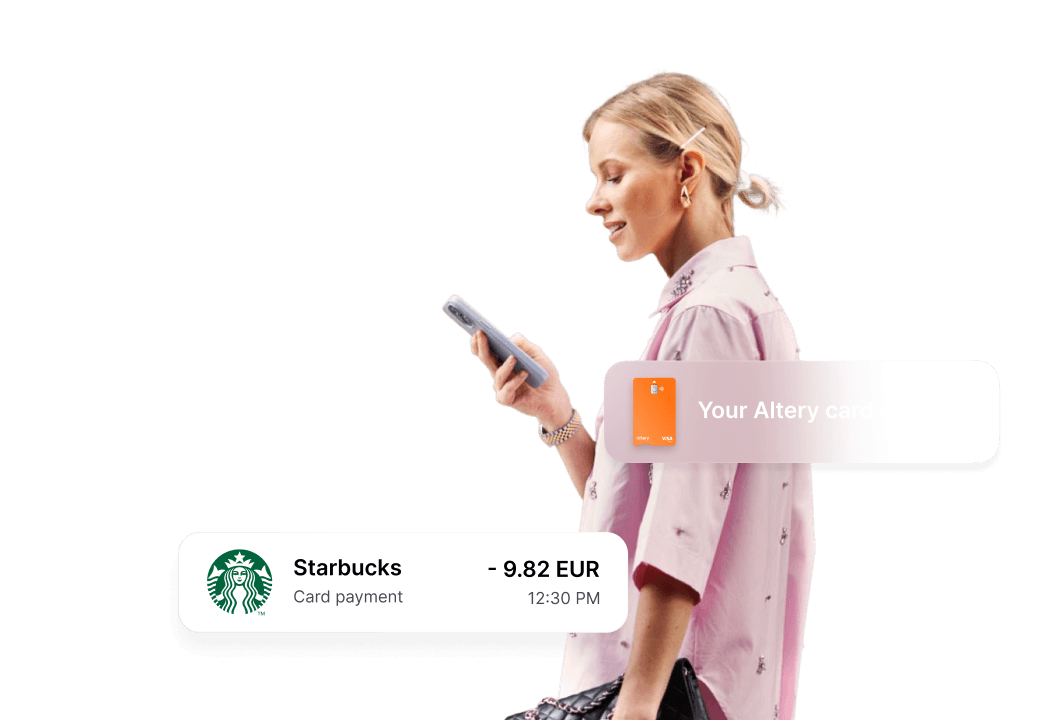
Whether you're freelancing or running a one-person business, keeping your personal and business finances seperate is a game-changer. This guide walks you through the exact UK documents you'll need (like your UTR and proof of ID), helps you choose the right account based on fees and features, and shows you how to apply with confidence.
It's everything you need to start your businesss journey on solid, professional ground.
Congratulations. Wehther you're freelancing, or selling a product, you've officially stepped into entreprenuership. And that means it's time to get your finances in orders.
I. Why bother with a dedicated business bank account
The dedicated business bank account is not merely a convenience; it is a strategic tool that dramatically simplifies operations and fortifies the long-term viability of your business. While a sole proprietorship is inextricably linked to the owner legally, financial separation is paramount.
- Simplified bookkeeping and tax preparation
This is perhaps the most immediate and significant benefit. When all business income and expenses flow through a single, dedicated account, the complexity of monthly cash flow tracking evaporates.
- Clean data: You eliminate the laborious task of manually sifting through personal transactions (utility bills, groceries, holidays) to identify legitimate business deductions.
- Audit readiness: Should your business ever be subject to scrutiny by Her Majesty’s Revenue and Customs (HMRC), having perfectly segregated financial records allows for swift, confident compliance, significantly reducing the stress and potential cost of an audit.
- Professionalism and credibility
Perception is critical in business. Presenting your clients and suppliers with professional paperwork demonstrates seriousness and reliability.
- Invoicing: Issuing invoices that direct payments to a clearly designated business account instils confidence in clients.
- Supplier relations: Paying suppliers through a business account streamlines your corporate identity, aiding in establishing credit relationships down the line.
- Access to future financing opportunities
Regardless of how debt-averse you might be today, future growth may require access to external capital, such as a commercial loan or a business overdraft.
Lenders and underwriters require clear evidence of a business’s financial health before committing funds. They will invariably demand business bank statements. If your statements are cluttered with personal spending, the process becomes complicated, often leading to loan denial or poorer terms. A dedicated account provides the clean, verifiable financial history required for future leveraging.
- Unlocking specialised business banking features
Personal accounts are fundamentally limiting. Business accounts are built to handle commercial needs:
- Integrated accounting: Most dedicated business accounts offer direct, seamless integration with major accounting software packages (e.g., Xero, QuickBooks, Sage). This means real-time expense classification and automated reconciliation, saving hours of administrative time monthly.
- Payment solutions: Business accounts often come bundled with tools for receiving online payments, processing card transactions, and managing larger volumes of transactions than personal accounts permit.
- Demonstrating financial separation (the audit shield)
While the sole proprietor structure does not provide the same limited liability protection as a limited company, maintaining distinct financial records is still a critical safeguard. A separate bank account serves as tangible evidence that you are operating your trade or profession with the professional intent of a business, which can be invaluable in demonstrating due diligence and financial separation if legal or financial disputes arise.
II. The pre-application checklist: Gathering your essential documentation
Opening a business account requires the bank to perform thorough due diligence (Know Your Customer, or KYC, checks). As a sole proprietor, you are the business, which simplifies the process compared to corporate entities, but documentation remains essential.
Use this checklist to prepare before approaching any bank.
- Personal identification and verification
You must prove who you are and where you live. Banks typically require two forms of ID: one primary photographic ID and one secondary proof of address.
- Photocard driving licence (full or provisional).
- National Identity Card (if applicable).
- Recent utility bill (dated within the last three months, excluding mobile phone bills).
- Council Tax bill (for the current year).
- Current bank statement (from a different institution, dated within the last three months).
- Business registration details (if applicable)
As a sole proprietor, if you operate under your own full legal name (e.g., "John Smith Freelancing"), formal registration is often minimal. However, if you are using a distinct trade name, you may need to provide evidence of that trading name.
- Trading name documentation: If you operate under a name other than your own legal name, you may need to provide a formal Business Name Registration document, confirming that you are permitted to trade under that moniker.
- Industry-specific licences: Depending on your field (e.g., financial consultancy, taxi services), you may need to provide a copy of any requisite local or national licences needed to legally practise your trade.
- Tax identification number
Banks need the relevant tax identification associated with the business entity. For sole proprietorships in the UK, this is typically your personal tax identification.
- The Default Identifier (UK): Your Unique Taxpayer Reference (UTR) or your National Insurance Number (NIN) is usually sufficient, as the business income is filed under your personal tax return.
- The Professional Upgrade (EIN/Alternative): While traditionally associated with companies that employ staff, securing an Employer Identification Number (EIN) (or the UK equivalent when hiring employees) adds a professional layer and protects the confidentiality of your personal National Insurance Number, which is otherwise used on much of your business correspondence. While not always mandatory for sole traders, it is a recommended step if growth and hiring are imminent.
- Proof of business address
If your business address is the same as your residential address, the secondary proof of residency (listed above) will usually suffice. However, if you use a separate physical office or a registered virtual office address, you will need documentation linking the business name to that address (e.g., a lease agreement or a service contract).
Meticulous Preparation: Banks are legally obligated to be thorough. If your documents are outdated, unclear, or incomplete, the application process will stall indefinitely. Ensure all names and addresses on the documentation match precisely.
Choosing your financial partner: How to select the right bank account
Selecting a business account is a strategic decision; you are choosing a partner to handle the circulatory system of your entire business. Do not simply default to your personal bank without careful consideration.
Here are the critical factors to evaluate:
- Account fees and minimum requirements (the cost of banking)
Business accounts are rarely free. Understanding the fee structure is paramount.
- Monthly service fees: How much is the non-negotiable monthly charge? Crucially, can this fee be waived? Many banks waive the monthly fee if you maintain a minimum daily or monthly balance (e.g., £2,000) or if you maintain a certain volume of transactions.
- Transaction charges: Unlike personal accounts, business banking often incurs a fee per transaction—whether a direct debit, a deposited cheque, or a cash withdrawal. If you anticipate high volume, look for accounts that offer a generous number of fee-free transactions per month or fixed-rate banking packages.
- Introductory offers: Many banks offer 12 to 24 months of free banking to new businesses. Take advantage of this, but ensure you understand the fee structure that kicks in when the introductory period expires.
- Digital capabilities and integration
In the modern business environment, technology must enhance efficiency, not hinder it.
- Accounting software integration: Prioritise banks that integrate seamlessly with your preferred accounting platform (e.g., Xero, FreeAgent). Automated feeds drastically reduce manual data entry and reconciliation time.
- Mobile experience: The bank’s mobile application should be robust, allowing you to manage payments, monitor balances, and deposit cheques digitally (if offered).
- Payment infrastructure: Ensure the bank supports the payment types you use most often (e.g., Faster Payments, BACS, international transfers).
- Growth potential and supporting products
Your bank should be able to support you as you scale.
- Credit facilities: Does the bank offer a business credit card or easily accessible business savings accounts? Establishing a relationship now makes accessing credit products easier later.
- Savings and reserves: Look for a linked savings option to automatically sweep excess cash into an interest-earning reserve fund.
- Accessibility and customer service
Consider your preferred interaction style:
- Digital challenger banks: These offer excellent, low-cost digital interfaces, often with superior technology and minimal or no monthly fees. However, support is usually digital-only (chat/email), and cash handling facilities may be limited.
- Traditional high-street banks: These offer the advantage of physical branch locations for in-person support, depositing cash, and face-to-face relationship management—a vital aspect for those who handle significant cash transactions.
The main event: Navigating the application process step-by-step
Once you have meticulously gathered your documents and chosen your financial partner, the application process is generally straightforward.
Step 1: Choosing your application path
Most banks offer two principal ways to apply:
- The online application (speed and convenience): This path is often fastest, particularly with digital banks. You will fill out forms online and upload scans or photographs of your essential documents. Identity verification is frequently done via a secure video call or digital facial recognition technology linked to your photographic ID.
- The in-person application (guidance and clarity): Visiting a branch is highly recommended if you have complex requirements or prefer personalised guidance. A branch manager can review your documents in real-time, clarify fee structures, and ensure the account you open is precisely tailored to your sole proprietorship's operational needs.
Step 2: Providing business details
You will be asked to confirm several key pieces of information, including:
- The legal structure (Sole Proprietorship/Trader).
- Your trading name (if different from your personal name).
- Your principal source of income and anticipated business turnover (required for compliance and anti-money laundering regulations).
Step 3: The account review and due diligence
After submission, the bank initiates its internal review. This process involves:
- Verification: Cross-referencing all submitted identification and business registration documents.
- Compliance checks: Ensuring the business activity complies with banking regulations (e.g., no prohibited industries).
- Credit check: Banks will typicalejly run a soft or hard credit search on the principal applicant (the sole proprietor) as the business finances are linked to the individual's history. Maintaining a clean personal credit history is therefore essential for opening a business account.
Step 4: Account approval and funding
Once the bank is satisfied with the due diligence, you will be notified of approval. The final steps include:
- Signing agreements: Reviewing and digitally signing the account terms and conditions.
- Minimum deposit: Some banks require a small minimum deposit to activate the account.
- Receiving materials: You will be issued a business debit card, cheque book (if requested), and online banking access details.
The fine print: Understanding your legal and compliance obligations
Opening the account is the beginning; maintaining it requires compliance with the terms and conditions agreed upon.
Consent to electronic delivery
Virtually all modern banking relationships operate under Consent to Electronic Delivery. This means you agree to receive all official statements, notices, fee schedules, and legal updates digitally (via email or within the online portal). It is your responsibility to ensure the bank has your current email address and to regularly check your online banking messages.
Security and fraud prevention
While banks invest heavily in fraud monitoring, you are the primary custodian of your account security.
- Confidentiality: You must maintain the strict confidentiality of user IDs, passwords, and access codes. Never share these details, particularly in response to unsolicited emails or phone calls (phishing scams).
- Monitoring: Establish a daily or weekly habit of monitoring your account statements. Promptly reporting any suspicious or unauthorised transactions is crucial to limit your liability in the event of fraud.
Authorised signers and indemnity
As a sole proprietor, you are the principal account holder. If you wish to grant transaction authority to another trusted party (such as a bookkeeper or spouse), this often requires a formal Power of Attorney or third-party authority form to be lodged with the bank.
By granting such access, you legally bind yourself to compensate the bank—a concept known as indemnity—for any losses or liabilities incurred as a result of transactions authorised by that delegated third party, reinforcing the necessity of choosing authorised signers carefully.
The foundation for your financial success
The journey from freelancer to established entrepreneur is paved with small, professional steps, and opening a dedicated business bank account is arguably the most fundamental. It is the action that formally transforms your "hustle" into a legitimate, well-structured business.
We have explored the necessity of financial separation, demystified the required documentation (your personal identity and tax reference), provided a framework for strategically selecting the right banking partner based on fees and technology, and guided you through the application process.
By laying this solid financial foundation, you have positioned yourself for simplified tax compliance, streamlined bookkeeping, enhanced credibility and greater confidence in seeking future financing. With your financial house in order, it's an investment in your future growth and the long-term success of your entrepreneurial venture.
Frequently asked questions
While the practice is not strictly illegal, it is strongly advised against by financial consultants and is contrary to HMRC’s best practice. Co-mingling funds destroys the clarity needed for accurate financial reporting. If you cannot easily distinguish between a legitimate business expense and personal expenditure, you significantly increase the time and cost associated with tax preparation, and critically, you increase your risk profile should you face an HMRC enquiry or audit. A separate account is a basic administrative safeguard.
For UK sole proprietorships, the primary identifier will typically be your Unique Taxpayer Reference (UTR), issued by HMRC, which is used for self-assessment tax returns. Banks will require this to ensure the account is correctly linked to your tax file. Additionally, your personal National Insurance Number (NIN) may be requested for identity verification purposes, especially when linking the business account to your personal credit history and due diligence checks.
Many banks offer introductory fee-free periods (often 12 to 24 months) for new businesses; take full advantage of these. However, once the introductory period expires, the best strategy is to look for an account that waives the monthly service fee when specific conditions are met. These conditions usually involve maintaining a minimum monthly or daily balance (e.g., keeping £2,500 in the account) or making a minimum number of transactions each month. Ensure you can realistically meet these requirements to bank for free.
The best time is before your first transaction. Ideally, you should open the account as soon as you have gathered your necessary documentation and have incurred your first identifiable business expense (e.g., purchasing a website domain, buying initial stock, or paying for software). By immediately paying for these startup costs from the dedicated business account, you ensure 100% of your records are separated from day one, setting the stage for perfectly clean bookkeeping.
The choice depends heavily on your transaction style. Digital Challenger Banks (e.g., Starling, Monzo Business) are excellent for high-tech users, generally offering superior app integration, zero or very low monthly fees, and excellent digital support. They are ideal if your business is primarily digital and handles very little cash. Traditional High-Street Banks are necessary if your business deals regularly with cash deposits or requires guaranteed face-to-face services, complex treasury management, or readily available in-branch human support.
This guide is provided for general informational purposes only and does not constitute legal, tax, financial, or other professional advice from ALTERY LTD or its affiliates. It should not be used as a substitute for advice from qualified professionals.
Altery makes no representations, warranties, or guarantees, whether express or implied, that the information in this guide is accurate, complete, or up to date.