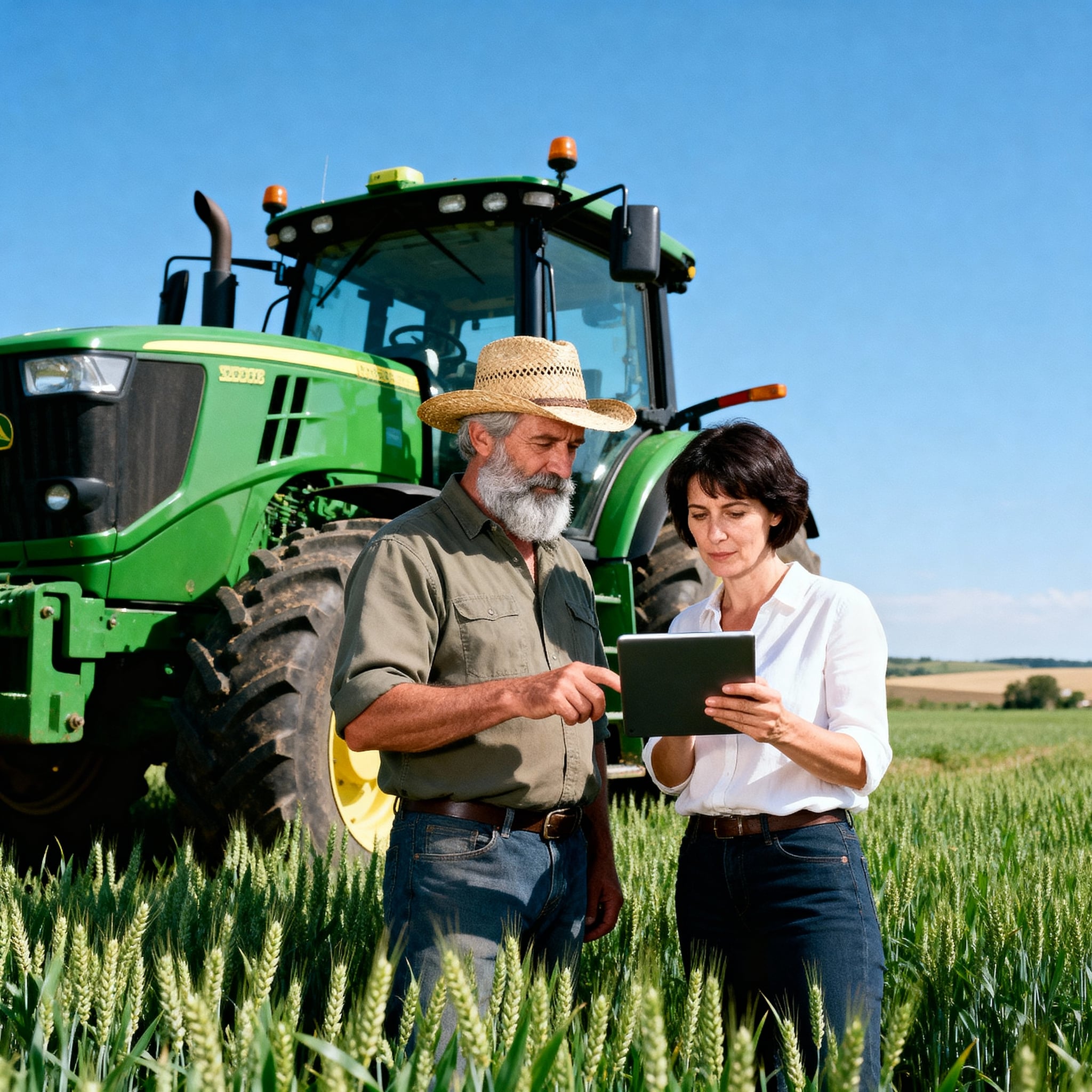
Move beyond outdated spreadsheets and discover how modern farm accounting software transforms financial administration into a powerful strategic asset. This essential guide for today’s agribusiness manager explains how specialist platforms integrate field data with financial insights, enabling smarter decision-making, streamlining compliance, and ultimately driving greater profitability for a more resilient farming future.
The quintessential image of farm accounting—a shoebox overflowing with faded receipts and a dog-eared ledger—belongs to a bygone era. Even its digital successor, the labyrinthine spreadsheet, is no longer fit for purpose. Today’s agricultural enterprise operates at the complex intersection of agronomy, technology, and volatile global markets. Managing a modern farm is as much about data management as it is about land management. In this demanding environment, relying on fragmented, manual systems is not just inefficient; it's a direct threat to profitability. This is where modern farm accounting software emerges, not as a mere convenience, but as the central nervous system for the contemporary agribusiness.

At its core, specialist agricultural accounting software is designed to bring order to the beautiful chaos of farming. It moves beyond generic bookkeeping by understanding the unique financial rhythm of the industry. Instead of a jumble of disconnected records, it creates a single, organised hub for every financial transaction. This centralisation is critical for handling the complexities of agricultural inventory—tracking quantities and values for seed, fertiliser, chemicals, and feed with precision. It also adeptly manages the financial lifecycle of livestock, from birth and purchase to sale. This level of detail provides a true, up-to-the-minute picture of the farm's assets and liabilities, a picture that is impossible to paint accurately with a standard accounting package.
One of the greatest challenges in farm finance is aligning operational activities with financial reporting. A single harvest’s costs and revenues often span two different financial years. Specialist software effortlessly handles this by enabling both calendar year and crop year accounting. This dual-view allows a farmer to satisfy HMRC’s requirements for tax reporting while simultaneously analysing the true profitability of the 2023 wheat crop, for instance. By correctly allocating every expense—from a specific fertiliser application to a contractor's invoice—to the right enterprise or crop, the software generates reports that provide profound clarity, streamlining compliance and transforming tax time from a scramble into a structured process.
The true power of today’s leading platforms lies in their ability to connect and communicate. They do not operate in a silo. Direct bank feed integration is now a standard, automatically importing transactions and radically reducing manual data entry. This provides a real-time, accurate view of cash flow, which is the lifeblood of any business. More profoundly, these systems integrate with the operational technology already at work on the farm. By pulling data from platforms like the John Deere Operations Center or Climate FieldView, the software bridges the gap between the field and the office. A planting operation recorded in the tractor’s cab can be linked directly to the financial cost of the seed and fuel, creating a single, reliable source of truth that marries operational actions with their financial consequences.
This integrated data allows agribusiness managers to shift their focus from simple bookkeeping to strategic financial analysis. With a few clicks, they can move beyond tracking overall farm performance to dissecting profitability by individual field, crop type, or livestock herd. This granular insight is transformative. It helps answer critical questions: Which fields are consistently underperforming? What is my true cost of production per tonne of barley or litre of milk? Armed with this knowledge, a farmer can make data-driven decisions that prioritise profit over sheer yield, whether by altering crop rotations, renegotiating contracts, or optimising input usage. The ability to generate a real-time balance sheet or profit-and-loss statement empowers confident, credible conversations with accountants, bank managers, and investors.
Recognising that farming doesn't happen behind a desk, modern platforms are designed with the user at the centre. Intuitive interfaces are accessible on any device, allowing a manager to approve an invoice from a tablet in the field or review cash flow on a smartphone. This accessibility extends to the entire farm team. The software becomes a collaborative tool where farm administrators, agronomists, and owners can work from the same set of clear, categorised data. Crucially, these platforms are backed by dedicated customer support teams who understand the nuances of agriculture, ensuring users can extract the maximum value from their investment.
In conclusion, farm accounting software is no longer an optional upgrade. It is a fundamental component of a resilient and forward-thinking agricultural business. It transforms financial administration from a time-consuming, retrospective chore into a powerful, forward-looking strategic advantage. For the modern farmer, rancher, or agribusiness manager, embracing this technology is a vital step in cultivating a more efficient, insightful, and profitable future.
This guide is provided for general informational purposes only and does not constitute legal, tax, financial, or other professional advice from ALTERY LTD or its affiliates. It should not be used as a substitute for advice from qualified professionals.
Altery makes no representations, warranties, or guarantees, whether express or implied, that the information in this guide is accurate, complete, or up to date.