Discover the ultimate guide to the Argentina Digital Nomad Visa, the gateway to living and working in South America's most vibrant cultural hub. This comprehensive article details everything a remote worker needs to know, from eligibility criteria and document gathering to navigating the online application system and understanding the costs involved. Whether you are seeking the bustling streets of Buenos Aires or the scenic landscapes of Patagonia, learn how to turn your Argentine dream into a legal reality while maintaining your foreign income.
Imagine closing your laptop after a productive morning, stepping out onto a sun-drenched balcony, and deciding between an afternoon of exploring European-style boulevards or indulging in a world-class Malbec at a fraction of the cost you would pay back home. This is not a fantasy; for thousands of remote workers, this is a typical Tuesday in Argentina.
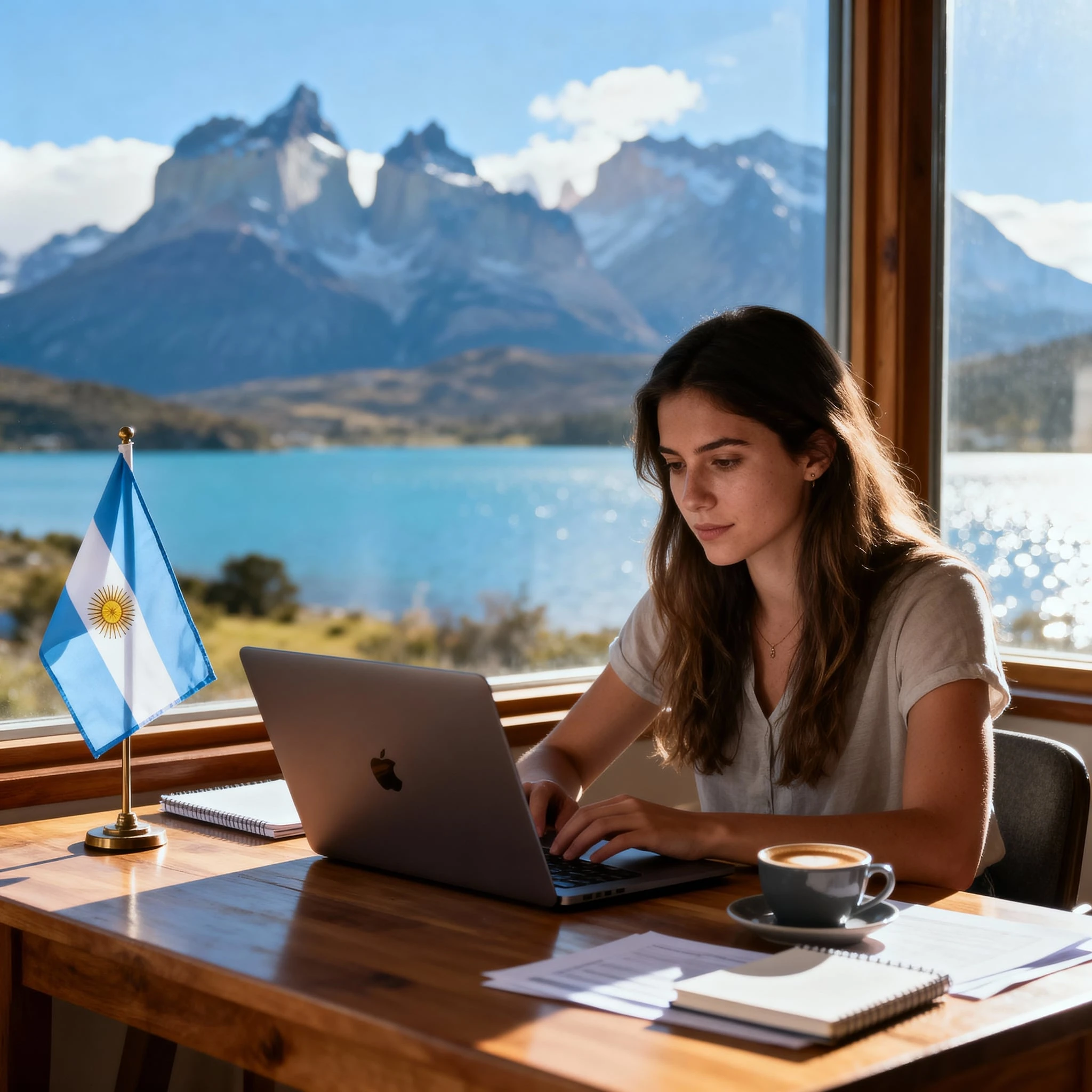
For years, Argentina has captivated travellers with its dramatic landscapes—from the red rocks of the north to the glacial majesty of Patagonia—and its passionate, vibrant culture. However, until recently, staying long-term required a delicate dance of tourist visa renewals and "border runs".
Moving to Argentina as a digital nomad? Open your Altery account
Download the app
Why Argentina is the Premier Destination for Remote Work
Choosing a base for your digital nomad journey is rarely just about the visa; it is about the quality of life you can construct once you arrive. Argentina offers a proposition that is difficult to rival: a sophisticated, high-energy lifestyle at a cost that allows for genuine financial freedom.
A Lifestyle of Affordable Luxury
The economic reality of Argentina is complex, but for those earning in hard currencies like the US Dollar, Pound Sterling, or Euro, the advantage is undeniable. The low cost of living does not equate to a compromise in quality. On the contrary, you can access affordable accommodation in trendy neighbourhoods that rivals the best of Paris or Madrid, dine at top-tier steakhouses, and enjoy a rich social life for significantly less than in other global hubs.
Connectivity and Infrastructure
One of the primary concerns for any remote worker is staying online. Fortunately, Argentina—and Buenos Aires in particular—boasts reliable internet connectivity. High-speed fibre optics are standard in most modern rentals and cafés. Furthermore, the country has a well-developed transportation infrastructure. Whether you are utilising the extensive ‘Subte’ (underground) network in the capital or catching a domestic flight to Mendoza or Bariloche, the country is well-connected.
Cultural Depth and Community
Beyond the logistics, there is the human element. Argentina offers deep cultural enrichment. It is a country of theatres, late-night bookshops, intense football rivalries, and a passion for socialising. You will also find a thriving community of remote workers. The country has become a magnet for international talent, meaning you are never far from a networking event or a fellow expat to share a mate with.
Add to this a quality healthcare system—which is accessible and highly regarded regionally—and a strategic location for exploring Latin America, and you have a recipe for an unforgettable chapter in your professional life.
Who Is Eligible for the Argentine Nomad Visa?
Before you begin packing your bags, it is imperative to determine if you fit the specific profile the Argentine government is looking for. This visa is not a blanket authorisation for anyone wanting to move; it is a targeted programme.
The Core Criteria
The Digital Nomad Visa is explicitly for foreign nationals who perform work for competitive remuneration for companies or clients domiciled outside of Argentina. You are not eligible to work for an argentine company or hold a local payroll position under this specific permit.
To qualify, you generally must meet the following criteria:
- Nationality: You must be a national of a country that does not require a tourist visa to enter Argentina. This covers a broad spectrum, including citizens of the UK, the EU, Australia, and many others.
- Remote Status: You must provide proof of remote work. This can be an employment contract allowing telecommuting or evidence of freelance activity.
- Clean Record: You must possess a clean criminal record in your home country and any country where you have resided for the past three years.
- Income Requirements: While the government benchmarks fluctuate with inflation, there is a minimum income requirement (often cited as a monthly equivalent relative to the local minimum wage, but practically speaking, showing approximately £2,000–£2,200 per month is a safe baseline). This ensures you can cover monthly living costs without becoming a burden on the state.
A Note for North Americans
U.S. citizens and green card holders are frequently the largest demographic applying for this visa due to time zone alignment. If you fall into this category, the process is streamlined, provided you can demonstrate that your income source is strictly external to Argentina.
The Paperwork Checklist: Gathering Your Documents
Bureaucracy in Argentina is legendary for its complexity. The key to a smooth application is having a meticulous dossier of documents ready before you even open the application portal. Missing a single stamp or translation can delay your approval by weeks.
Here is what you need to gather:
- Valid Passport: Your passport must be valid for at least six months beyond your intended stay. Ensure you have scanned every page, not just the photo page.
- Proof of Remote Work: This is the cornerstone of your application. You need a letter from your employer authorising you to work remotely, or if you are self-employed, freelance contracts and invoices.
- CV or Resume: A clear, updated curriculum vitae in English (and ideally Spanish) detailing your professional history.
- Proof of Income: You must demonstrate financial solvency. This is usually done by submitting the last three to six months of bank statements. These should clearly show your salary or client payments being deposited.
- Criminal Record Certificate: You must obtain a police background check from your country of origin (and anywhere else you have lived for more than a year in the last three years). Crucially, this document must be legalised with the Hague Apostille.
- Proof of Accommodation: While not always strictly enforced at the initial click, having a rental contract or a booking for your initial stay in Argentina helps validate your intent.
- Health Insurance: You must hold a medical insurance policy that covers you in Argentina for the duration of your stay.
The Importance of Translation
This is a vital detail: any document not in Spanish (such as your criminal record or bank statements) usually requires a translation. However, it cannot be just any translation; it must often be done by a certified public translator ( Traductor Público ) and legalised by the local Colegio de Traductores. Do not rely on Google Translate for official submissions.
Navigating the Online Application: A Step-by-Step Guide
Argentina has digitised much of its immigration process, which is a blessing, though the systems can sometimes be temperamental. The application is generally processed through the RaDEX system (Radicación a Distancia de Extranjeros) found on the Migracion portal.
Step 1: Create Your Identity
You will first need to register on the site. In some iterations of the process, this may link to the Mi Argentina app, a digital citizen registry platform. You will create an online account using your email and passport details.
Step 2: Select the Correct Permit
Once logged in, navigate to the application form for "Transitory Residency – Digital Nomad". Be careful not to select "Tourist" or "Permanent Resident".
Step 3: Uploading Documents
You will be prompted to upload all the required documents listed in the previous section. Ensure your scans are high-resolution and in PDF format. The system may time out if you take too long, so have your files organised in a folder on your desktop beforehand.
Step 4: Payment and Submission
After uploading, you will be directed to pay the fees (detailed below). Once submitted, the waiting game begins. The processing time can vary wildly depending on the workload of the Dirección Nacional de Migraciones , but typically ranges from 14 to 45 days.
Applying from Within Argentina
It is possible to enter Argentina as a tourist (visa-free) and apply for the Digital Nomad Visa via RaDEX once you are on the ground. Many nomads prefer this route as it allows them to settle in before tackling the bureaucracy.
Transparent Breakdown of Costs and Fees
Financial transparency is key when planning a move abroad. While the Argentina Digital Nomad Visa is less expensive than some European equivalents, there are still costs to consider.
- Visa Application Fee: There is a base fee for processing the application. This is subject to inflation adjustments but generally sits around the equivalent of roughly 200 to 250 USD / 180 to 220 GBP.
- Consulate Fee: If you apply from an Argentine consulate abroad (rather than via RaDEX in the country), there may be specific consular handling fees.
- Apostille Expenses: Before you even pay Argentina, you will pay your home government. Apostilling a UK criminal record check or a US FBI report costs money, as does expedited shipping.
- Approved Translations: This is often the hidden cost. Certified translators charge by the page or word count. For a full dossier, budget at least £150–£300 for professional translation and legalisation services within Argentina.
- Payment Methods: The application portals usually require a credit card payment. Note that non-refundable fees apply; if your visa is rejected due to an error, you do not get the money back.
- Currency of Payment: If you are paying whilst physically in Argentina, clarify if the fee is charged in Pesos or Dollars. Due to the exchange rate gap, paying in Pesos with a foreign card used to be disadvantageous, but new regulations for foreign credit cards have improved the exchange rate (the "MEP" dollar rate) for tourists and visitors.
Visa Duration, Renewals, and Future Options
The Digital Nomad Visa is categorised as a "transitory" residence. It is not intended for permanent migration, but rather for an extended chapter of your life.
How Long Can I Stay?
The visa is initially granted for 180 days (six months).
Can I Stay Longer?
Yes. You are eligible for a renewal for another 180 days, bringing your total possible stay to one year. This renewal must be requested before your initial visa expires.
What Happens After One Year?
Technically, the Digital Nomad Visa is capped at one year. If you fall in love with Argentina—which is highly likely—and wish to stay longer, you would need to transfer to another type of visa.
- Rentista Visa: For those with passive income (investments, rental income) from abroad.
- Permanent Residence: This is difficult to achieve immediately without family ties or significant years of residence.
- Temporary Resident: There are other categories, but they usually require local study or formal local employment.
If you do not renew or switch visas and you stay beyond your date, you will be liable for an overstay fine upon exit. While this is a common practice for some tourists, it is not recommended for professionals who wish to maintain a clean immigration profile.
Navigating Taxes and Financial Obligations
Disclaimer: I am a journalist, not a tax lawyer. The following is for informational purposes only. You should always consult with an international tax specialist.
One of the most attractive aspects of the digital nomad lifestyle is the potential for tax efficiency, but Argentina is known for its high tax pressure. How does this affect you?
Tax Residency
Generally, if you spend more than 12 months in Argentina, you risk becoming a fiscal resident, which subjects your worldwide income to Argentine taxes. However, because the Digital Nomad Visa is a transitory permit limited to one year, most nomads avoid triggering full tax residency.
Foreign Income
The premise of this visa is that your income is foreign. The Argentine tax authority (AFIP) generally does not tax foreign income for non-residents on transitory visas. You are living on money generated elsewhere.
Tax Benefits and Incentives
To attract nomads, the government has previously discussed specific tax benefits to ensure that nomads are not double-taxed. It is worth checking if your home country has double taxation agreements with Argentina.
Domestic Sources
If you start earning money from domestic sources (e.g., you pick up a gig consulting for a Buenos Aires firm), that income is fully taxable in Argentina, and you would strictly require a different work permit to do so legally.
Life on the Ground: Settling In
Once the passport is stamped, the real adventure begins. Where should you go, and how do you integrate?
The Hub: Buenos Aires
The vast majority of nomads land in Buenos Aires. It is the beating heart of the country's IT and startup scene.
- Palermo: The undisputed favourite for expats. It is filled with trendy cafes, coworking spaces, and nightlife.
- Recoleta: More European, architectural, and slightly quieter, but still very connected.
- San Telmo: Bohemien, historic, and gritty, perfect for those seeking old-world charm.
Beyond the Capital
Don't limit yourself.
- Mendoza: For wine lovers and those who want the Andes mountains as a backdrop.
- Bariloche: A paradise for hikers and skiers, looking much like Switzerland but with Argentine prices.
- Cordoba: A university city with a youthful vibe and great hiking nearby.
Building Your Circle
The digital nomad community in Argentina is welcoming. Websites like Meetup and various Facebook groups are active. Look for networking events specifically for tech and creative sectors.
Language and Culture
While you can survive with English in Palermo, you will not thrive until you try Spanish. Investing in Spanish language immersion—even just a few hours of private tutoring a week—will unlock the culture. Argentines are incredibly warm and chatty; knowing the language allows you to move from being an observer to a participant.
Finding Housing
Affordable housing is abundant, but short-term rentals (Airbnb) are priced in Dollars and can be higher than local rates. Once you have your visa and some local contacts, you might find better deals through local real estate agents (inmobiliarias) or expat community word-of-mouth.
Frequently asked questions
To qualify, you must be a national of a country that does not require a tourist visa to enter Argentina. You must be a remote worker employed by a company or clients based outside of Argentina, possess a clean criminal record, and demonstrate sufficient monthly income (generally recommended around £2,000–£2,200) to support yourself without local employment.
No, the Digital Nomad Visa is strictly designed for those earning income from foreign sources. You are not permitted to work for an Argentine employer or be on a local payroll. If you wish to work for a local company, you must apply for a different residency permit sponsored by that employer.
The visa is initially granted for a period of 180 days (six months). However, it is renewable for one additional period of 180 days, allowing you to reside in the country for up to one year in total. You must apply for this renewal before your initial six-month term expires.
Generally, holders of the Digital Nomad Visa avoid triggering full fiscal residency because the permit is transitory and limited to one year. As long as your income is sourced entirely from abroad, the Argentine tax authority (AFIP) typically does not tax it. However, if you stay beyond 12 months or earn local income, your tax status may change.
Yes, the majority of the process is digital. Applications are submitted through the RaDEX system on the national migration portal. You will need to upload high-quality scans of your apostilled documents, passport, and proof of income. However, depending on your location, you may need to visit a consulate or attend an appointment in Argentina to finalise specific details.
This guide is provided for general informational purposes only and does not constitute legal, tax, financial, or other professional advice from ALTERY LTD or its affiliates. It should not be used as a substitute for advice from qualified professionals.
Altery makes no representations, warranties, or guarantees, whether express or implied, that the information in this guide is accurate, complete, or up to date.