
Reclaiming French fuel duty (TICPE) refunds for hauliers

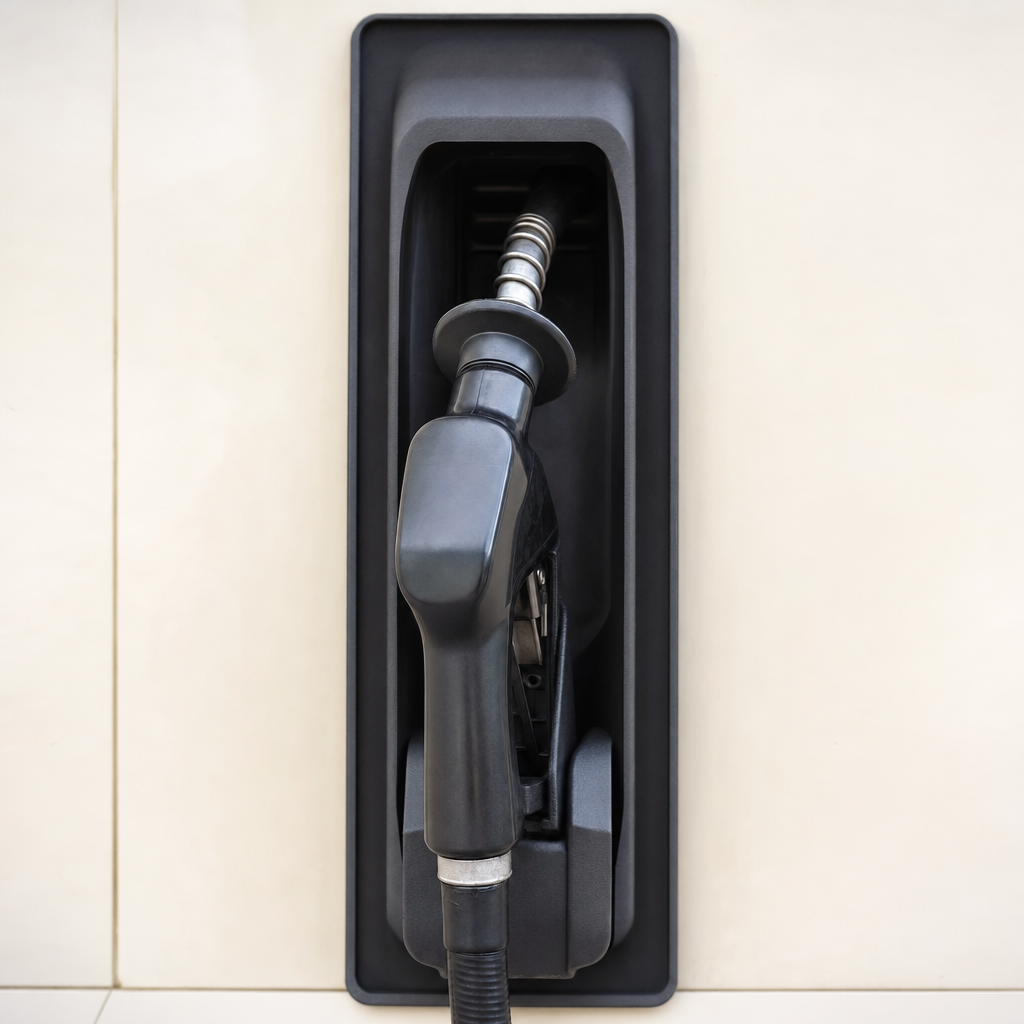
If your fleet runs cross-border lanes through France, a meaningful slice of what you pay at the diesel pump is recoverable. France levies a domestic excise duty on energy products, commonly known as TICPE, and commercial road hauliers operating qualifying heavy goods vehicles can claim a partial refund of that duty on business diesel. Over a year, across a busy fleet, the sums are not trivial.
The catch is timing. You pay the full duty every time you fill up, but you only get part of it back when you file a refund claim, which is done periodically rather than at the point of purchase. That gap between paying now and recovering later is a working-capital problem unique to fuel-heavy operators, and it is the part most worth planning for.
A business account built for logistics and freight
Open your accountWhat the TICPE refund covers
TICPE is the French domestic excise duty applied to energy products, including the diesel your trucks burn on French roads. Commercial hauliers running qualifying heavy goods vehicles can apply for a partial refund of the duty paid on diesel used for that business transport. The refund is partial, not total, so you are recovering a portion of the excise component, not the whole fuel price and not the VAT, which follows a separate procedure.
Eligibility is tied to the vehicle and the use. The refund is aimed at heavy goods vehicles used for commercial goods transport, so light vans and non-qualifying vehicles fall outside it. Because the rules are specific and revised periodically, confirm the current eligibility conditions and vehicle thresholds with the French tax or customs authority, or a qualified adviser, before you build a claim around them.
How the rate works and why it varies
The refund is calculated by applying a rate, expressed in euros per hectolitre, to the qualifying volume of diesel for the claim period. As of recent guidance the rate has varied by region rather than being a single national figure. Illustratively, recent rates sat in the region of around 15 to 17.5 euros per hectolitre for many areas, with a higher rate published for the Paris region (Ile-de-France) and a lower one for Corsica. Treat those as indicative only and check the current published rate for each region before filing.
For 2025 there was also an optional weighted flat-rate route for operators fuelling across several regions, but that flat-rate option was being withdrawn from 1 January 2026, after which regional rates apply. In other words, the mechanics are changing, so confirm exactly what applies for the period you are claiming rather than carrying forward last year's assumptions.
The working-capital lag
This is the part that catches fleets out. Claims are filed quarterly or annually, not at the pump, so the refund money is recovered on a lag. You finance the full duty up front, every fill, and only get part of it back months later once the claim is filed and processed. The faster you burn diesel, the larger that financing gap becomes, and it sits on top of the time you already wait to be paid for the loads themselves.
Practically, that means treating recoverable fuel duty as a receivable, not as cash in hand. Some operators set aside a reserve sized to the expected refund so the eventual repayment is a planned top-up rather than a surprise, and so the day-to-day fuel spend does not quietly starve the rest of the business of working capital while the claim sits in the queue.
Keeping records claim-ready
A refund claim is only as strong as the records behind it. You need clean, categorised evidence of qualifying diesel purchases, tied to qualifying vehicles and to the correct region and period. If you run several operating entities or country desks, mixing their fuel spend together makes claims slower to assemble and harder to defend if queried.
Keeping fuel spend separated by entity, and ideally tagged by vehicle and region as it happens, turns claim preparation from a reconstruction exercise into an export. It also makes it easier to forecast the refund you are owed, which feeds straight back into sizing the reserve that bridges the lag. Where a refund agent or adviser handles the filing for you, clean per-entity records are exactly what they will ask for first.
How Altery fits
Altery does not file refunds or give tax advice, and the rates and rules above change, so always confirm the current position with the French tax or customs authority or a qualified adviser. What Altery provides is the financial plumbing around a refund that arrives on a lag and in euros. A multi-currency account that holds EUR alongside USD and GBP gives you a clean place to receive the refund when it lands, without bouncing it through an unrelated currency and losing margin to FX on the way in.
Because the money comes back months after you spend it, ring-fenced reserves let you set aside an amount sized to the refund you expect, so the recovery delay does not quietly drain working capital. FX runs on your timeline rather than at whatever rate happens to apply on the day funds move. And if you run several operating entities, multi-entity management with real-time balances and clean per-entity records keeps each entity's fuel spend separated, which is exactly what a refund claim, or the adviser preparing it, needs to see. Altery is not a bank; this is general information, not tax advice.
Frequently asked questions
Yes, the partial refund is generally available to commercial hauliers operating qualifying heavy goods vehicles on French roads, including operators established outside France, subject to the current eligibility conditions and procedures. The rules for non-French companies have changed in recent years, so confirm the current requirements with the French tax or customs authority or a qualified adviser before filing.
The refund is partial and is set as a rate per hectolitre that has varied by region, recently in the region of roughly 15 to 17.5 euros per hectolitre for many areas, with a higher rate for the Paris region and a lower one for Corsica. These figures are indicative and change, so check the current published rate for the relevant region and period.
Claims are filed quarterly or annually rather than at the pump, so the refund arrives on a lag, typically months after you paid the duty. Plan for that gap as a working-capital cost rather than assuming the money is available immediately.
No. The TICPE refund recovers part of the domestic excise duty on diesel, while VAT on foreign expenses is recovered through a separate procedure under the EU refund directives. They are different claims with different rules and timelines, and a fleet often pursues both.
Run your fleet and freight finances from one account
Open your accountThis guide is general information to help logistics and freight businesses and is not financial, tax or legal advice. Altery is not a bank. Check your own circumstances before acting.
Keep reading

Reclaiming foreign VAT on road freight expenses
A carrier can often reclaim VAT it pays on diesel, tolls and other expenses in EU countries where it is not registered. Here is how the refund routes work and why the recoverable basket differs country by country.

Cross-border tolls versus fuel: budgeting the bigger cost
Road tolls per kilometre now rival, and sometimes exceed, fuel cost for heavy trucks in several European countries. Here is why, and how to budget a large, route-dependent, multi-currency cost.
Multi-currency accounts for cross-border haulage: stop FX leakage on every leg
One cross-border haul touches several currencies before you are paid. Each conversion quietly shaves your margin. Here is how holding the currencies you earn and spend keeps that money in the load.